Episode 23
Childhood Apraxia of Speech (CAS): Signs and Support, with Brooke Rea
Today, we're talking about Childhood Apraxia of Speech (CAS) with special guest Brooke Rea, an expert SLP who's got all the right credentials and then some. She’ll breaking down what CAS really is, especially for parents who might be scratching their heads wondering why their little one seems to struggle with speech. Brooke gives us the lowdown on the signs of CAS, the importance of early intervention, and how this disorder can sometimes play peek-a-boo with autism, making it tricky for parents to know what's what.
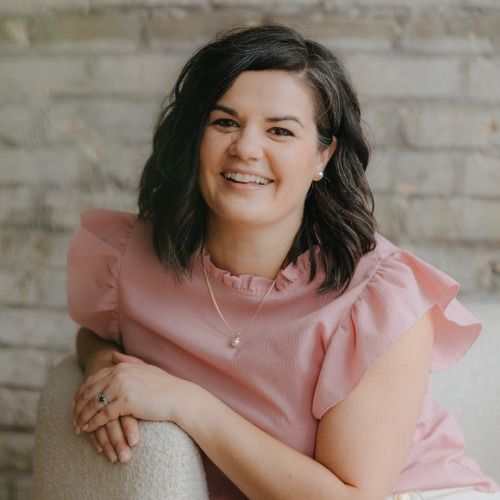
Brooke Rea is Apraxia Kids Recognized for Advanced Training in Childhood Apraxia of Speech. She owns a mid-size private practice in Guelph, Ontario, where her own time is restricted to children with motor speech disorders. She spends considerable paid and volunteer time supporting professionals and parents with CAS throughout Canada and we're so glad to welcome her to the show!
Timestamps:
(01:35) - Welcome
(02:42) - Meet Brooke
(20:12) - When To Seek Expert Help
(36:24) - The Distinction Between Apraxia and Speech Delay
(45:01) - Communication Challenges in Children
Mentioned In This Episode:
- apraxia-kids.org
- parent.apraxia-kids.org
- childapraxiatreatment.org
- https://childapraxiatreatment.org/parents/
Brooke is the owner of Childhood Apraxia & Speech Therapy Centre in Guelph https://apraxiaspeechtherapy.ca/
More About Brooke:
Brooke Rea is Apraxia Kids Recognized for Advanced Training in Childhood Apraxia of Speech. She owns a mid-size private practice in Guelph, Ontario, where her own time is restricted to children with motor speech disorders. She spends considerable paid and volunteer time supporting professionals and parents with CAS throughout Canada. She has lectured at numerous university and college programs and has been an invited speaker at conferences and workshops across North America to speak about childhood apraxia and pediatric motor speech disorders. Brooke is licensed with the College of Audiologists and Speech-Language Pathologists of Ontario (CASLPO) and a Certified SLP with Speech-Language & Audiology of Canada. In addition, Brooke sits on the Apraxia Kids Professional Advisory Council, is a founding member and current chair of Apraxia Kids Canada and is the founder and moderator of The CAS Collective.
Follow Brooke:
- Instagram: @apraxiaspeechtherapy
- X: @apraxiaSLP
- Bluesky: @brookereaslp.bsky.social
- Facebook Page: @apraxiaspeechtherapy
- LinkedIn: @brookerea
- Website: apraxiaspeechtherapy.ca
****
Visit The Sensory Supply for the best in sensory products to soothe, stimulate, and inspire.
Learn about our clinic Elemenoe where we work to reach milestones together through speech, language, behaviour & learning.
Visit neurodiversallyspeaking.com for all podcast & show info:
Follow us:
Contact:
Have a question or a topic that you'd love to hear on the show? Get in touch with us at hello@neurodiversallyspeaking.com
Mentioned in this episode:
CTA - Brit - Show Idea
Transcript
Tell me in, like, the plainest, simplest terms, like, what, are parents coming to see you? And they're saying, I don't know.
Brooke:Yeah. So I mean, our biggest signs that we're looking for are things like really limited output or really not variable output.
And let me explain that a little bit.
So, you know, maybe they have the same sort of, like we said, those same sort of go to pieces or, you know, even when we look at babbling, it all kind of sounds the same. If they are babbling, they have a. Maybe they don't have very many sounds yet.
Brittany:Hey, everyone, I'm Brittany, speech language pathologist.
Shawna:And I'm Shawna, behavior analyst.
Brittany:And we're your hosts at Neurodiversally Speaking.
Shawna:This is a podcast where we bridge the gap between research and practice, exploring autism and neurodiversity through the lens of speech and behavior.
Brittany:Whether you're a parent or a professional, we'll give you practical tips to bring into your home or your next therapy session.
Shawna:Let's get started.
Narrator:Welcome to the Neurodiversally Speaking podcast with Brittany Clark and Shawna Fleming from Elemenoe, brought to you by the Sensory Supply.
While we aim to make neurodiversity is Neurodiversally Speaking suitable for all audiences, mature subject matter can sometimes be discussed, suitable only for those over the age of 18.
If you're under the age of 18, please talk to your parent or guardian before listening to our show or listen together with them to stay up to date on new episode releases and show updates. Connect with us on Instagram @NeurodiversallySpeaking.
You can also send us listener questions to address on the show at hello@NeurodiversallySpeaking.com Neurodiversally Speaking starts now.
Brittany:Welcome back to neurodiversely Speaking. I'm Brittany, speech language pathologist.
Shawna:And I'm Shawna, a behavior analyst.
Brittany:Today's conversation is a really important one, especially for families who feel that their child wants to communicate, but something is kind of getting in the way.
Shawna:We're talking about childhood apraxia of speech, or cas, and how it can show up alongside autism in ways that are often misunderstood or even missed.
Brittany:One thing I wanted to say up front because I do find this is confusing, and I would love your opinion on this, Brooke, who's our guest. We actually can't diagnose childhood apraxia of speech unless a child is speaking because we need them to produce speech in order to access it.
So I'm sort of jumping ahead, but I wanted to introduce that Right away as a caveat. And then we'll introduce our guest speaker.
Shawna:So for children who aren't speaking yet, we might wonder about things like apraxia, but we don't really know for sure at that point.
Brittany:Yeah, because at that point it could be phonology, mortar planning, language processing, or like a whole mix of different things. And so early on the focus is really supporting communication and not rushing to a label. Perfect.
But today we're so excited to be joined by Brooke Ray, a pediatric speech language pathologist based in Ontario, Canada. Like us, so she's very close by, which is lovely, and she is really recognized for her expertise in childhood apraxia of speech.
Her name, like we said, it comes up all the time. And so we're very honored to have you here today, Brooke.
Brooke is the owner of Childhood Apraxia of Speech Therapy center center and uses evidence based motor speech approaches like DTTC and rest, which we'll talk more about today. Brooke, we're so glad you're here.
Brooke:Thanks guys. I'm really excited to talk about this.
Brittany:Great.
Brooke:I'm very passionate about.
Shawna:Yeah, of course. And we're so excited to have you. Like we were saying, you are such an expert or a leader certainly in Ontario on this topic.
And as a behavior analyst, I certainly support children that have an apraxia diagnosis but is not necessarily like wheelhouse. So I'm excited to learn lots today. And so we hear about this often.
Can you start by walking us through what is childhood apraxia of speech in a way that makes sense for parents?
Brooke:Yeah, absolutely. So childhood apraxia speech is something a child's born with. We don't always know why.
As, as our science continues to improve, we're learning there, there may be a genetic component to childhood apraxia of speech, I think, but not genetic in terms of like hereditary, but genetic in terms of it lives in the genetic makeup of a person. And so we actually call that de novo. So it's actually something that just spontaneously happens when a child is developing in utero.
And so that's what we mean when we say genetic. So it's something a child is born with that there's a disconnect in the brain that doesn't allow for speech to be easy.
There's a planning, there's a programming component that, you know, the language system may be intact, but being able to actually put the sounds together, move the mouth, the teeth, the tongue in the way a child wants to. Doesn't always happen though. Happen easily and, or in the way they want to.
So, you know, it requires a lot of therapy, speech therapy that requires a lot of practice. And we talk a lot about motor planning outside of speech in lots of other ways that I think makes a lot of sense to families.
So, you know, learning to tie your shoes is a motor plan. And when you first started it, it was really confusing and complicated and you had to take a lot of effort. You had to really practice.
But now, I mean, you as an adult, you put shoes on, you probably don't even remember consciously tying them and putting one over the other and doing a loop. So that's a motor plan. Learning to drive is a motor plan. You know, flipping an omelette is a motor plan.
So we have lots of motor plans, but speech is, you know, something you and I take for granted. We, we learn how to do it without really consciously thinking about it.
But children with cas, it's a very conscious, it has to be a very learned thing. Their, their neurological systems just aren't able to plan and program the way yours and mine are.
Brittany:Right. So the child knows what they want to say. We hypothesize, and then they're just.
Them getting the word out is so difficult that motor planning and the sequencing of it. And so a child, before they're even speaking, like, say, let's say a nine month old, for example, we can't diagnose CIS at that time. Right.
But because they're not speaking yet, but we would, you think, like they would know a word, but maybe just the sequencing of it is so difficult that they wouldn't even if they could talk, they, it would be difficult for them.
Brooke:Yeah, absolutely.
And, and that idea that at that age we might start to see some early signs, you know, so babbling, for example, may not develop the way we might expect in another infant. We may not have those sort of initial constants. Everything might just sound a little bit more like vowels and.
Or it may not actually be anything at all. Sometimes those children are going to just be. There's an absence of, an absence of vocal or verbal production.
Brittany:So those are some of the things that if a parent is wondering maybe does my head child have apraxia? And they're not. They're sort of an early communicator. You'd be looking at, did they babble and sort of when.
And then what did it look like or sound like?
Shawna:Right.
Brittany:Like, was it all vowels? And I've read like it could be like a go to sound. Do you want to talk about that?
Brooke:Yeah, we talk about those go to or all purpose sort of either sounds or words. It depends on the. It depends on the speaker or the child. But, you know, they have sort of a default.
So that child who sort of says duff for everything, or that child who does a like ah for everything. And. And again, there's a.
There is a difference between, you know, that typical stage where we expect early talkers to sort of, you know, all animals are da or all people are da. Da. Yeah, but then there should be that change because they start to understand in apraxia, we're not necessarily gonna.
We're not gonna see that change that sort of go to becomes everything.
Brittany:Right, Right.
And so in more typical language development, a one and a half year old might say like and T2 or like a different variety of sounds is what you're saying. And like, with apraxia, sometimes there's like that go to sound where duh is just for everything. And certainly I've seen that.
And it's a good question to kind of ask parents if they're wondering or if I'm doing the diagnostics and they're a little bit older and talking, then I'll sometimes say, like, what was it like when they first started to talk? And that. Okay, perfect. So, yeah, what are some of the. Like, if the child is speaking, then what does the diagnosis look like?
Like, how are you kind of getting to that diagnosis of casual?
Brooke:Yeah.
So once they are speaking and we have enough sounds and intent behind language and communication, then we're able to really look at how they sequence or if they're able to sequence different sounds together.
So there's three sort of big pieces that we're looking at for kids with apraxia that we talk about as sort of our hallmark features or our big characteristics. And those are that there's a lot of inconsistency. So a child may say something one way in a moment and the next in a different way.
This inconsistency may be, you know, back to back to back, or it may be across days or across, you know, a period of time. But, you know, like you said, maybe mama is sometimes. Mm, sometimes, uh, sometimes ma. Sometimes it's maybe even something like ba or ugh.
Like, it could be very inconsistent. One of the others is that sequencing.
So we're actually looking for what we call like a disrupted or a halted speech characteristic that we see that in children with cas. So it might just sort of sound segmented. There's not really a flow to speech.
You can really see or hear that there's effort between putting sounds, whether it's consonants and vowels together, so that sequencing piece. And then the third hallmark characteristic is the prosody, or what we call the melody of speech, or I refer to as the melody of speech.
So, you know, you and I talk with this sort of flow of high and low pitches and different speeds depending on what we're saying. And children with childhood apraxia speech have difficulty, you know, adding that melody. The volume changes, the.
The different, you know, pitches and frequencies to their voice. And so things can sound quite monotone or quite flat. So you're.
Brittany:For the example, then you'd be like, how are you today? Is something like the prosody that would be in an average sort of speaker, especially in an adult.
And with someone with apraxia, it might be like, how are you today? Instead, something like that, just as an example for parents.
Brooke:And lots of kids will learn prosody attached to words. And so it's not, you know, it's not uncommon for somebody with apraxia maybe to spontaneous, spontaneously say hi. But they always say it like that.
So hi is how they always say it, because the motor plan of the. Of how to use the pitch and the volume is kind of built into that plan and program for how they say those sounds.
And so sometimes kids are missed because they sound like they have, you know, that melody to their voice. But actually, when you start to examine that more closely as a speech therapist, you note that it's always kind of the same.
Always kind of the same prosody in those moments. And so we have to look, during assessment, we're going to look at what happens if we try and manipulate different pieces of that prosody.
How do they do. How do they respond?
Brittany:So can they say hi?
Brooke:Hi.
Brittany:Hi, for example?
Brooke:Yeah.
Brittany:Yeah.
Brooke:Cool. Yeah, that's exactly it, you know. Yeah. Faster, slower, louder, quieter, higher, lower, all those things.
Brittany:Cool. Okay. In Canada, that's where we are anyway.
I know we've got listeners everywhere, but in Canada, a diagnosis for CAS can be tricky because speech pathologists are the one who are the most knowledgeable about cas, but we can't formally diagnose, especially here in Ontario. Can you talk about how a family would go about the diagnostic process?
Brooke:Yeah, it's definitely murky and a bit gray. I think we continue to get a little more clarity from our regulatory college here in Ontario as we go.
But, you know, we really need to think about the label of CAS as a qualitative descriptor. It's to really mark the identification of a certain set of characteristics we see or don't see. And so it's not really a medical diagnosis.
It's not something that, you know, a neurologist can do or a physician could do without the support of a speech language pathologist. Because it's really the qualitative differences we see in the speech characteristics. There's no blood test, there's no genetic test.
There's no, you know, an MRI isn't going to pick it up. A CAT scan. Those kinds of things are questions we get. It really has to be done by a speech therapist.
So a family, if they're looking for, you know, support and knowing if something is cas, would work with a clinician.
Typically, you're going to want to find a clinician who has some advanced training in CAEs, just because it is, you know, it is a very unique disorder, and it takes some training to really discern what is apraxia from, like you said, all those other things it might be, and it can be really challenging. And then working with that clinician to work with your. Your.
The rest of your child's professional team and that physician can really be the one to communicate that diagnosis. But again, with the support of, you know, that list of characteristics from the speech language pathologist.
Brittany:Awesome. So helpful. Thank you. And then I don't want to put you on the spot, but do you know how prevalent it is?
Brooke:Oh, great question. So we usually say about what we know right now at least is like one to a thousand.
Brittany:Okay.
Brooke:So one in about 1,000 kids. And what we usually tell speech pathologists is that's going to be, you know, 3 to 5% of your caseload coming in with a speech sound disorder.
You could expect maybe to see an apraxia. So it's not. It's not overly common.
Brittany:Okay. But certainly in your practice it is.
Shawna:And that's what you do every day.
Brooke:Yeah.
Brittany:Great. Okay. Thank you.
Brooke:That's.
Brittany:I know it's a lot to unpack, and it's. It's difficult to sort of understand the sort of the nuances of cas. So thank you for kind of breaking that down.
Shawna:I wondered a little bit with CAS if there's ever another motor planning component. Like, do you ever see, like, I don't know, like, moving their arms is,.
Brittany:I don't know, like, limb apraxia, we might call it. Yeah.
Shawna:Like, I'm thinking of a client that we had that ended up getting a diagnosis of apraxia eventually.
But for a long time, just getting him to imitate actions in a song, like, we're Singing the Wheels on the Bus or something, and he was just kind of sitting there and wouldn't engage. And we, like, couldn't. I, like, clinically, I was like, I don't know. This kid loves this song. He's so happy. Like, you know, it's not that he doesn't.
I don't know. And he likes, like, doing stuff together. Why is he not doing the wheels on the bus go round and round?
And so I wondered if there was ever, like a motor component that you see or.
Brooke:No, there. There often is. So one of the things, again, just as we learn more about CAS as a.
As a society, in a research, you know, body, is that we're learning that CAS by itself is. Is the exception.
Almost always with cas, there's going to be a comorbidity, whether that's, you know, a language disorder, whether it's another sort of body apraxia, whether it's autism, whether it's down syndrome, you know, there's. Whether it's dysarthria. There's a large. A large number of comorbidities that have been identified.
So to see those kids, it's not uncommon to see fine motor or gross motor differences in those children as well. And it makes a lot of sense because speech actually is a fine motor task by definition.
And so for them to use hands and fingers and to be able to print or be able to sequence and be able to build blocks, that system is very tied in. And so most of those kids, we would call that developmental coordination disorder or dcd. And that's a very large comorbidity with cas.
When the body's involved, we talk about dcd.
That would be something that a physio or an occupational therapist is most likely to identify because they're going to look at a certain set of characteristics. But we also know. Interesting, because, Shauna, that description you just gave also makes me think we do see kids with ideation apraxia.
So I had a client quite a few years ago who could identify actions on a picture, could tell me which one was which, but when he actually went to act it out, he. He literally did not know how to start his body in that same movement.
So, you know, if we had a picture of running and a bunch of others, and I'd say, you know, show me running. No problem. What's this kid doing? Running.
Shawna:Great.
Brooke:Show me running. And I'd have him, you know, stand in the room and he would just freeze. He really didn't know how to get started.
Shawna:Okay, yeah, this sounds exactly like, what we are seeing with the client.
And it made, like, as a behavior analyst, of course, I'm always thinking, like, what's the antecedent here and what's the consequence and where's the motiv? And, like, looking at it from a different perspective than a speech pathologist. Of course.
Brooke:Yeah.
Shawna:And so I'm looking at this kid, and I just, like, couldn't figure him out. And it genuinely seemed, like, so tricky for him. Our first thought was that he was just shy.
And I wondered a little bit if that happens too, for children with apraxia. And we talk about this a lot at the clinic, and I'm sure you as well, is that they're labeled as shy or something else.
And then again, these things get missed because of that, like, other sort of explanation that we give.
Brittany:And the imagine a lot of the time, very bright.
Shawna:Right.
Brittany:Like, they're, like you said, they're understanding what they want to say. And then some cases could even label something.
Brooke:Yeah. Getting. Getting that body moving. No, that's absolutely true. And I think, you know, personality certainly is going to weigh in.
And again, why we, you know, there's so many other things not talking can be. In some cases, it really is that sort of, you know, I'm just not ready or I'm really shy.
Brittany:Right.
Brooke:But in those other cases where you're like, no, there's something. There's something more going on here. It's really. It's really important to look at the. The motor systems, for sure.
Shawna:Right, okay. And that makes a lot of sense.
And then the other thing I'm thinking about and that we talk a lot about with parents is that kids are smart, and so they start to realize where they're different from their peers. And so sometimes, again, with children that we've seen that have apraxia at the school, they, like, stop talking. Or maybe they.
We have a guy right now. I'm thinking of where it looks. He maybe has some of the symptoms of autism in that he's not initiating play with peers and some of those things.
But then as a behavior analyst, again, I'm thinking like, oh, I wonder if it's, like, punishing for him to interact with peers because they don't know what he's saying. Or for him, he feels that confidence go down because he knows that his speech is different from his peers.
Brooke:Yeah. And that's actually one of the.
One of the things I see clinically when it can be so hard to differentiate, you know, which piece might be autism, which piece might be personality. Which piece might be motor. And that. That confusion. A lot of kids will, you know, like you said, be mislabeled or misidentified as.
And apraxia and autism can look very, very similar, especially in early days, because we know that, just like you said, you know, a child who is apraxic and has already recognized their failure to, you know, for their speech system to work the way they want, they are more likely to avoid eye contact, they are more likely to not want to participate. They are more likely to want to play the same routine things which will.
Which can look like a specific interest, but is really more about that child knowing the phrases or the words really consistently. And they know those words and phrases are going to be there for them when they want to interact with that event.
So it's not atypical for us to see kids, you know, with a very preferred interest. It's more about them almost controlling the environment so they can control their speech participation. So, yeah, like you said, it can. Can.
It can be very, very challenging and require quite a few, you know, visits with a family when. When it could be both. It could be either. Yeah.
Brittany:Thank you. Now we're going to talk more about CAS and autism. But before we don't go down that path, I wanted to just wrap up sort of this intro section here.
And if a parent is listening, I want them to understand, like, when would I go see Brooke? When would I go see a speech therapist? Like, families are coming to you, and what are the most common things that you're seeing?
I know we talked about sort of those three indicators, but, like, if I'm a mom, I don't know what sequencing and prosody means. Right. And so, yeah, what is. Tell me in like, the plainest, simplest terms, like, what are parents coming to see you?
And they're saying, I don't know, I think maybe there's something wrong. And like, you're saying, oh, yeah, that you're. You've got. Yes. Like, what are. Do you know what I'm saying, Brooke?
Like, tell me as a parent, what does that look like?
Brooke:Yeah, so I mean, our biggest signs that we're looking for are things like really limited output or really not variable output. And let me explain that a little bit. So, you know, maybe they kind of have the same sort of.
Like we said, those same sort of go to pieces or, you know, even when we look at babbling, it all kind of sounds the same. If they are babbling, they have. Maybe they don't have very many sounds yet.
We have Some really good milestones in terms of, you know, those, those well, baby visit and well, child visits, you know, if they're not meeting, those speech milestones, if they don't have consonants and they're. Everything kind of sounds, you know, vowly or they're really just hard to understand. You're not necessarily understanding them.
Strangers certainly can't understand them. Those would be signs that yeah, there, there could be something bigger, there could be a motor component.
The other piece I'd say is if you do speech therapy and you're, you know, it's just, it's not, you're not seeing the progress you're feeling like it's slow, you know, it's not even week to week, you're seeing gains, you're not seeing gains over months.
Brittany:Right.
Brooke:Those would be signs that, you know, a traditional speech therapy approach may not be appropriate because we may be looking at a motor, a motor component, in which case we need motor speech therapy.
Brittany:Okay, thank you. I feel like that's a good description. And then what age are we talking here?
Because that really matters too, you know, if a six month old is babbling but not, I'm kidding, but you know, from here. And again, they don't know the same sort of norms that you and I know for speech development. So what ages are you most commonly seeing?
Brooke:Yeah, I mean we do see a lot of kids sort of that 18 month to two and a half year. You know, maybe they haven't hit first words, maybe they haven't hit some of those milestones. You know, they were a really quiet baby.
Those descriptions, you know, they're not really connecting. They're still doing a lot of pointing or non verbal communication, but they're not actually using their mouth or it looks really effortful.
Those would be sort of my go tos. And I think if you have, if, you know, if we talk so much about like a parent's gut, it's so true.
Like if something just feels off, it's never going to hurt to be seen by a speech therapist and just make sure communication is on track. We know early intervention is so important, especially if it's cas. So the earlier we can start, certainly the better.
I would say the majority of our kids are sort of in that three to four to five year range here at the center, at least in terms of, you know, they've gone through delayed speech onset, now they've started some speech therapy. You know, traditional speech therapy isn't necessarily showing progress. And so then we're like, oh, maybe this is motor and kind of make that flip.
Shawna:Okay, and then what's the intensity that we're talking about here for you're saying early intervention and then how much intervention is recommended?
Brooke:That's a great question. And it's a hot topic right now.
So most of the research is coming out of the states and it's sort of indicating three to five times a week is sort of this idea. But if you read a little deeper and you understand the education and the medical systems in the states, it's very, very different.
So, you know, three to five times a week is really a great marker for a school where a child's, you know, three, four or five in the states and the speech pathologist is housed in the school. So walking down the hallway to get, you know, Joey or Sarah for 15 minutes every day isn't actually a big deal.
But here in Canada, you know, our speech paths have huge caseloads. They're moving between schools. And so this idea of three to five times a week literally is inviable.
And so we do a lot of counseling in that area with families to help them understand. Yes, I know you're reading three to five times a week, but it is a different system. And so we need to do more practice.
But that's in most cases either going to fall to the family to do more of that practice or other people who might be available in the schools or the daycares to help get that practice in every day. So it is kind of a tricky thing because that research really is based on a different model of care.
But we know most of the clients that are here, we're usually recommending at least twice a week. That would be like a half hour session. And come, come in and just really drill that motor practice.
And again, thinking about if you were learning to tie your shoes and you practiced one shoe once a year, you can imagine how long it would take you to learn to tie your shoes. And so that's kind of that idea. We talk every day. We've got to practice that improvement and teach that motor plan so it can be automatic.
Shawna:And then are you able to transfer your or give like homework to the families? Like once you're like after a 30 minute session, like, okay, keep working on this thing.
Brooke:Yes, absolutely. So typically in apraxia, we're working on a very few number of target words or phrases at a time.
And so that that relationship with family and knowing that it's being practiced at home is so vital. And that's really too where the functionality of goals comes in.
Because you know, the homework I actually just sent home with my client this morning was I beat you. And in terms of his video game with his siblings, you know, he wants to be able to say, I beat you and get all this down.
So, I mean, that's naturally gonna happen. Hopefully lots of practice at home because it's a really natural thing.
So, you know, families are a huge, huge, huge partner in this kind of therapy because they're just with their parents, you know, much more than they can be in the therapy room.
Shawna:I love that functional example. And then again, as a behavior analyst, the motivation to practice is there. Right? He wants to say it.
You've, like, got full client values into your treatment and really customized. I'm sure I always find what you guys do very interesting.
And I was thinking when you guys were talking earlier, if anyone hasn't sat back and just say a sentence and notice how your tongue is moving. Like when Brittany first taught me about, like, B is like pushing air out M. It's like the same movement, but air stays.
But like that B and M are like the same thing with your mouth movement, but it's the. I don't know, I. Actually, the way your tongue moves inside there, I'm not sure. But for people, maybe that might not have an appreciation.
Like you said, it's a really automatic process.
Brittany:Yeah.
Shawna:We speak and we really don't think about it.
Brooke:It.
Shawna:And so I find what you guys do, like, very fascinating that way. And then you'll hear something like, oh, the. I don't know, the B and the T are distorted and this is happening.
And then you'll know that you want to work on those sounds. And then maybe that's why you put in the thing, I beat him or whatever. You know what I mean? From your assessment, you're.
He's obviously, you're able to then come up with these really functional real life phrases that could be really impactful for him based on sort of what would look like nonsense information to an outsider like myself, where you're doing that analysis of their speech.
Brooke:I mean, that's one of the things I love about, you know, my job is we often get those first words in our sessions. Those first moms, those first mamas, the first I love you. Yeah, the first I did it.
And it's incredibly hard work, but that is the reward every single time. And, you know, a parent getting to hear their.
Their child say their name the first time or a child saying their name the first time, it's got to be fun, functional. Absolutely.
Shawna:I love that and then I had one other thing that I was hoping to get out of this conversation today, clinically for me in the autism space.
And when we think about apraxia, I'm very interested in the co occurrence of that and I think maybe even not as much now, but five, six years ago I would have said that apraxia is over prescribed.
Brittany:Is that a word?
Shawna:Yeah, for children with autism because they didn't have speech yet. And so how can we diagnose them as a. I don't know now I don't see that really as much and I'm not sure if things have sort of shifted.
But what's your experience with the co occurrence?
You talked a little bit about how it's hard to sometimes tease apart which thing it is and that that can be a long process and potentially that leads to the over diagnosis. But anyways, I wondered like clinically, what's your experience and what's your viewpoint on that?
Brooke:Yeah, that's a really great question. It's also a really hot topic, depending on what you read. And like you said five, six years ago, I would agree with you.
We even still in some places today we have this sort of over diagnosis of cas, this over identification of it and again usually very well meaning because we know lots of places apraxia in terms of the severity is going to allow a child to access more therapy possibly. And so we're seeing sort of this label applied where perhaps it should not be.
When we look specifically at the autistic population we're seeing anywhere in publications in terms of like 0 to 65% overlap. So I mean, good grief, that's a really big range. Right. So you know something, I.
One of the documents I read most recently, and I think it was published in 22 or 23, you know, sort of said it's more around like maybe the 16% mark. I think when I, you know, in terms of my, my CAS expert sort of colleagues, we definitely feel like it's more around the 5, 10.
And again, just because that overlap can be really hard to discern, but that doesn't mean it isn't motor.
And so that's what I want to sort of clear, sort of not clear up, but like really explain is that CAS is just one of the motor disorders that kids can have. We also have something that's more referred to as speech motor delay.
And just, you know, because we love all of these acronyms and names in our field, but speech motor delay is, you know, the presence of a motor involvement. So you can See that effort, you can see the difficulty. There may be distortions in the sounds of. And so you're still seeing a motor speech disorder.
They just don't meet all the criteria for apraxia of speech. And why that's important is that as CAS speech paths, we definitely believe that there's a very large overlap of autism and speech motor delay.
And so there is sort of that difference. And I know for so many families it can be confusing in terms of, you know, well, what does my child have?
And so I think there's more co occurrence of autism and speech motor delay.
And so we need to still take a motor speech approach, but it may not be specifically the criteria to meet sort of that character or that, that label of CAS itself.
Brittany:Interesting.
Shawna:And then does your treatment differ if they have formal CAs or the speech motor disorder?
Brooke:Excellent question. Because yeah, I mean it's not going to change.
You know, especially early days of therapy, we're taking a motor speech approach, which means we're doing certain, you know, certain number of reps, certain kinds of reps, kind the, certain, the way we think about what sounds and, and the functionality of putting things together. What is going to perhaps look different is, you know, what that looks like over time.
So you know, most of our kids, if we take sort of autism off the table, speech motor delay, kids are going to resolve you, it's not going to be if they've had the right treatment, it's not going to be a long term issue. Whereas apraxia in and of itself is something that you, you do have for life, that child will have that for life.
They won't necessarily be affected by it their whole life. We can work really well with the symptoms and, and certainly, you know, have a really functional communicator.
And in lots of cases actually you can't, you know, you can't tell as an adult somebody has CAS if they've had, you know, really robust therapy.
So that's how it can kind of look different is that if it's speech motor delay, we kind of, you know, people sort of say it's just not quite as severe, if you will, that doesn't mean it doesn't feel severe. But in terms of the longevity and the prognosis or sort of that long term picture, it might be different.
I think two, it's so important, you know, to, when you're just really looking at the whole child, is that speech clarity or the motor speech piece, is it the biggest hindrance in that moment of communication breakdown or is there something else Happening that actually that should be the focus for therapy. And so, you know, and that changes all the time, obviously, because children are changing all the time.
So there may be times when we see speech, motor and autism sort of co occurring. There may be times where the speech itself really should be the primary focus, but there's lots of times it's gonna be something else.
Brittany:Yeah, I like that. And we're always weighing that right. Sort of balance in therapy. Like what's the.
Is it language that we're really building right now or is it the speech intelligibility? And I would argue a lot of the times for early communicators, we want to keep encouraging that language and the speech, you know, will.
Will kind of like, it'll keep developing, but the focus has to be that language first before we can like fine tune the speech sounds.
Brooke:Absolutely. Yeah.
Shawna:I was wondering a little bit about like early. So a lot of kids with autism don't start talking until they're maybe four or five.
And so something I've often wondered is, and I don't know if you think about this as a speech pathologist is like they haven't had as much practice speaking as they're typically developing peers. And then does that show up as a speech motor disorder or. No, they would be characteristically different.
Brooke:It could, it could be both. It could be either. Like there would be cases of both, I think. I mean, that's where.
That's where really knowing as a clinician, when you're looking at the two, like really what is that difference between late talking or speech delay versus oh, we've got a motor issue here. We can't sequence the sounds. And so that there's. There's just a really qualitative difference in what that will.
How that will appear in a child's speech. And so they could, you know, go on to be very clear at 4 or 5 or, you know, 6 or 7 or whenever they begin verbal speech.
But yeah, like Brittany said, like, making sure those communication systems are in place is so important.
You know, one of the, one of the questions or one of the calls we get most often at the center is, you know, can I, can I just bring, you know, can you get my child to talk? Yeah, well, you know, and I talk about talking is so different than communicating.
You know, I very possibly can teach your child to speak and say, you know, go and stop and mind, but are they going to have an avenue to use those? Do they know how, how they want to communicate? What does that look like? What is their Intent for communication.
And I know you guys have talked about that before as well, so I've.
Shawna:Actually never used that wording, but I love it. Teaching them to talk versus communicate. And again, and I think that comes up with autism commonly.
Brittany:Right.
Shawna:Is like the some kid not in apraxia world. But we often see kids that can talk lots, but they're not communicating. Yeah, right. They're scripting an entire show, which is amazing.
And it's all out, but not necessarily communicating with someone else. So I think that distinction is really interesting. I had one more sort of logistical question. So this is childhood apraxia of speech.
What happens when they turn 18? Are you like, do they go for a reassessment and move into what aos?
Brittany:What's that? That would be acquired. Which would be like our neurological kind of patients.
Shawna:Yeah. What does their diagnosis change to when they turn 18?
Brittany:Good question.
Brooke:Yeah, this is. You are hitting every hot topic here.
Brittany:So there's.
Brooke:There's definitely. I mean, we use the word childhood apraxia of speech. It's what Sort of long story short, but like, committee.
ing to be the wording back in:I don't personally know that it's going to go anywhere. I think that's where more people start calling it cas, because they're just like, I have cas.
And so they don't necessarily have to say that childhood part, you know, out loud. But we talk about it as being childhood apraxia speech because it starts in childhood.
And we moved away from the terminology developmental apraxia because developmental sort of has this idea of like, I'll grow out of it.
Brittany:Yeah, yeah, yeah.
Brooke:And you're not going to grow out of cas. I know it's semantics. You got to love this field.
Shawna:Then how come you're not going to grow out of it? So let's say I get treatment and my speech is good now, like, you can't distinguish that I have anything. Why do I still have cas?
Brooke:Yeah, great question. But it's because it's a neurological condition. So it's with the way your brain has formed. It's literally the way your brain is mapped.
And so you can practice in. Have really fluid speech with the therapy that you've done.
And again, the more obviously you can talk, the more you can practice talking, the more you can practice the more you can talk and sort of becomes this, you know, snowball effect. And so, you know, in young adulthood or in your teens, you then sound, you know, like your peer group.
But what we actually have been able to show through research is with exactly, you know, the right or, as you might consider wrong tasks, we can actually break speech down again. So, you know, as an adult. Yeah, you can break it.
You can break it right down, which is obviously devastating when this research happens and you can be like, I perfectly fine. And then somebody gives you just the right task under the right conditions, and you have a really hard time again.
And the other piece that happens, and I'm often being educated myself, is the speech system is going to be more influenced or impacted with fatigue, with stress in other sort of situations where, you know, a non CAS speaker is not going to stumble over their words the same way.
And so there's, you know, accounts of those with apraxia who otherwise look resolved but in the wrong circumstances can start to look very apraxic again all of a sudden. Quite unsettling. Yeah.
Shawna:Yeah. And I'm thinking something we talk about optimism in as well is this idea of diagnosis and a label.
And I was thinking in this case, like, where is this label helpful in later life? You know, and so we see with autistic teens that the label of being autistic is helpful. Right.
And it's like a point of identity and helps them sort of navigate why some things are more challenging or that sort of thing. Right. And that's where we're seeing this label is, like, really actually empowering. And then with eas now I understand what.
What you're seeing is, like, why I might hold on to that label into adulthood is before a big speaking engagement or I work somewhere and I don't know, I've got a lot of fast input for whatever reason, you know, that then I could use that as an or, like, I understand that I need to make sure I get, like, really good sleep. I. I don't know, whatever my strategies are.
Brooke:Yeah, I.
Shawna:Okay. Interesting. I never knew any of that.
Brooke:Really important. Cool.
Brittany:Every time you talk, I have a thousand questions coming into my brain I.
Shawna:Want to ask you.
Brittany:This is so fascinating. Thank you for that, though.
Shawna:That was a great question about the.
Brittany:Childhood piece, and I want to come back to that in my brain and really think about that. I was wondering if you have any clients because you've been in practice now for a few years.
Do you have any clients who you started with little, and now they are older and to tell you about their experiences, like going through teenagehood, let's say.
Brooke:Yeah, and it's. I mean, it's always, it's always fun, you know, a sighting in the wild, as I call it. You know, it's a small enough community and, you know, to find.
To run across a client.
And, you know, I always would love to, like, reach out to, you know, clients who've graduated from speech, which is obviously the end goal, you know, hear them talk. And so I have, I've had a handful now, you know, who've done even like a recording.
So I can, can show it when I'm teaching in a workshop or just to have that example. And I would say, I think I have. There's so many factors that go into how clear a child will become and how clear that speech will become.
But I can say with confidence they're intelligible. But what I mean by that is you could understand them when you're out in the wild. And it's so exciting to see and to get those updates when I do.
Brittany:Get them for sure. To any past clients of any of ours. We always love to hear from you. Definitely want to know how you're doing.
Shawna:Yeah.
Brittany:Exactly. How are you?
Brooke:Yeah, yeah.
Brittany:Thank you. Okay.
I have a question too, coming back to the autism piece, because I've had this question before from parents where maybe this is a child with autism who's like 8 or 9 or something, and they're non vocal, so they're not using words to communicate. And the parent says, well, do they have apraxia? How do you approach that?
Brooke:Yeah, so you are gonna not really know until we have vocal.
So that idea that we need to know how the sequencing sounds, when they put sounds together, being able to do sound on demand, you know, if we can't actually assess what this speech system sounds like, we aren't gonna know.
Brittany:Right.
Brooke:So those are the kids that, you know, I'm, I'm still gonna be looking at, you know, what can they do verbally or vocally, Even just starting with open, maybe that might have some kind of context. And again, you want them to be functional.
So even things like, oh, you know, as some kind of like, comment or response or ooh, in terms of like, yuck, I don't like that, or a protest. Can we, can we help them to just turn sort of that like, speech system into something and learning how to turn it on and off under.
Under their own control would be where we would. Would we start if they're interested?
And that would be, you know, I definitely have met children and young teens and tweens who, you know, they've become so proficient at their augmentative or their nonverbal communication that they're not really interested in working. It's just so hard for whatever reason that verbal speech just isn't a priority to them. It's really, really hard.
And I feel like I'm a great communicator otherwise. And helping, you know, sometimes family members be respectful of that can be challenging. Can be challenging.
But you know, even in those cases of a child who's maybe not yet vocalizing on demand, trying or volitionally even, but trying to find something that'd be really motivating and then can we attach some kind of sound to start to make that connection with them? And so in the right circumstances, it might be, it, it might be successful.
And I also know, I mean, lots of our kids who are AAC users, you know, batteries die and cords go missing and things happen and they get dropped. So, you know, I'm always, always, always pushing for some kind of, any kind of indication of yes, no, even if it's nonverbal.
But again, like you we were saying shout to out some of those kids, nodding and shaking their head is actually another motor plan that they struggle to do.
And so even as a speech therapist looking at that, like, do we have a yes, no, do we have something that we can be communicating in some way if that speech system isn't going to cooperate? Apraxia could be one of the reasons, but there are others.
And so, yeah, if we don't have speech to listen to and to assess, we can't say it Is or isn't CAs. And I think you're right.
I've definitely met some doctors and pediatricians who are applying that label and it's, it's not appropriate, unfortunately.
Brittany:Right, thank you. That was what I was hoping you would say, kind of by answering that for my brain. Go ahead.
Shawna:I think you brought up a good point too about teaching, like focusing on speech production, of course, but also developing multimodal communication strategies. Because obviously, like we've said, said it's going to take a lot of practice. Right. You're retraining the brain. It's going to take a long time.
And so how do I teach you?
Yes, no, and like some of these other ways so that you can get your message out and still establish those friendships and have that confidence communicating. And I got to imagine in a 30 minute session that is very, very busy. And so what does that look like?
The treatment Approaches I know you guys have sort of alluded to, that's very drill like. But then you're also working with young kids. How do you keep that fun?
And certainly as a behavior analyst, I would be interested in your tips and strategies.
Brooke:Yeah, I mean, it is a lot to balance.
I mean, one of the things I think all of us, you know, are in the center are thinking about each single session, like which, which is my priority goal today. Is it a speech day? Is there a language piece we need to tidy up? Are we actually moving to a literacy?
Because literacy is going to be such a great repair or clarification strategy. So we also don't want to leave literacy to the wayside for reading and.
Brittany:Writing for kids who don't know.
Brooke:Yeah, yeah, sorry.
So, you know, we have lots of, I have a handful of, you know, kids who are literate enough now that texting or like, you know, text to speech or even texting in a chat is, is how they repair their communication with me. So one of my, one of my therapy clients on that I see virtually if we have a communication breakdown, he's going to type it to me.
And I mean, that's so empowering for him and just opens up this whole other, this whole other world. So that literacy is also really important to balance. So yeah, Shauna, every session is like, ah, what's screaming at me the loudest?
And it often means that multiple speech therapists are going to be involved, especially in Canada where, and Ontario specifically, where you've got, you know, one speech pathologist really focused on AAC and language, which is going to be your school board speech path. Then you've probably got like a school based rehab person who might be the speech speech therapist.
And then a family may have a private therapist or two also kind of balancing that out.
Brittany:Right?
Brooke:So, yeah, sessions, sessions and that collaboration.
These families often have big teams, but that idea of helping kids both identify that there's been a communication breakdown, because some of our speakers are not even aware of that. You know, they're chatting away like you said, or they're, they're scripting where they're, you know, they're very content with their vocalization.
And as a listener, you're like, I am not sure what you're telling me. So, you know, identifying there's been a breakdown of communication and then learning how to repair it is so important. You know, can you show me?
Can you spell it, can you draw it, can you search it, can you print it? Can you take me those kinds of things?
Brittany:I love it, we're always talking about that multimodal communication, no matter what kind of population actually, like whether it's adults or kids.
Shawna:Right.
Brittany:That sometimes we just need another way to communicate and it might not be talking.
Shawna:Yeah, exactly. I'm thinking.
Okay, so for the CAS component, you're gonna do some drill based stuff with the child or to get lots of practice and I shouldn't say drill based. You're gonna try and get a lot of trials in, in your session.
Brooke:Yeah, lots of trials.
Shawna:Is it that you're sitting at the table and you're practicing stuff with flashcards or are you like embedding it into like. You guys. I know. Speech pathologist, you guys, very skilled at this. Selecting very thoughtful therapy materials.
Like a game that will make them see the word over and over and over again. Or is it a combination of those two?
Brooke:And apologies. You did ask that before and I went on a different tangent.
Brittany:No, it's okay.
Brooke:Yeah, does have to be. It's got to be fun. I mean, we know that. Learning and fun. I mean, you guys have spoken to this too. You know, fun is how kids learn.
And if it's fun, it fires the brain up in a different way. And we have research to indicate that. And so it's gotta be fun, it's gotta be functional.
So a great example is this morning I was playing junior Monopoly with one of my friends.
And so we're practicing our numbers in terms of counting the numbers on the dice and then counting the spaces and making sure we're getting all the right sounds and being able to do that. Then we're working on the words like missed, I missed it. Stay. I'm asking so you can hear. Sort of. We're working on some of those blends the middle.
But I'm doing it multiple, multiple times in that moment. And that's the.
One of the biggest differences in motor speech therapy versus more of a traditional speech therapy is the kids come to learn that they're going to have to say everything like three to five times even in a go. And that idea that they need that practice to talk, so they need to do it multiple times in that moment. And so we're doing everything multiple times.
Can you make it part of a game? Can you search something? Sometimes it might look more drill based or what we would call drill builds. Like, I'm focused, I'm doing it.
My motor planning. My motor planning is all focused on saying these speech sounds.
And then I get to go, you know, shoot some baskets in a basketball hoop or I get to go put, you know, crash down a tower. You know, we love, we love all games with many, many pieces we can, you know, it just creates all those opportunities for many, many trials.
And you know, I joke, but even in my sessions as we're cleaning up, I'm making those practice trials as well. So sneaking them in there. But it's very easy to make fun.
And you know, I definitely get the question, like, oh, this two and a half year old, you know, we're suspecting cas, but I can't get high reps and that repetition and I'm, I always say, I beg to differ. You just gotta think outside that box.
Brittany:Yeah, exactly.
Brooke:Um, there's so many ways to get lots and lots of practice.
Brittany:So I was just wondering, in a 30 minute session, what are you, when you say reps, you're talking about repetition or number of trials or number of ways that or number of times the child repeated the word. Do you have like, when you're training staff, do you say like, we guys, we got to get a hundred reps in a half an hour. Do you have a number?
Brooke:So there's this magical number that's floating around that says 250 to 300 in an hour. I honestly, Shauna said I love it.
Brittany:In case you didn't hear that.
Brooke:I can't, I can't tell you honestly if that is a myth. It's like this like perpetuated, magical number floating around. I mean, I can tell you that my goal is at least 100, if not higher in half an hour.
Cool. One of the things I'm always when I'm training staff is, you know, record a session and who's talking more? Whose voice do you hear more?
You don't even have to listen. You can just kind of have it on in the background. But if you hear your voice more than the child's voice voice, guess who practiced the most.
Shawna:I like that.
Brittany:Cool.
Shawna:I want to add this in at the clinic and also would like to add trial tracking.
Brittany:Yeah, I love that.
Shawna:It's fascinating.
Brittany:I want a whole other episode on strategies and data tracking for clinicians. I think that would be so cool. We have so much to learn from you. This is such an amazing and important discussion.
I know we've geared this one a little bit more towards parents and like asking those questions, like if I suspect or I've heard this word for apraxia, then what am I even looking for? What do I. Where do I start?
So I think you've done an excellent job in trying to break that down for parents because it is so complex and nuanced and there's lots of different things. Things could be. And then in some regions it's hard to get a diagnosis right.
You got to see a speech pathologist or therapist, but then you also need that supported from a physician or someone else. So it's not easy. It's very complex. But I think you've done a great job at breaking that down down.
And I'm serious, I would love to have a second part of this where we're talking a little bit more about the treatment and like, what does that look like? And then how does that change when we're looking from a neuroaffirming lens and like, how are you getting all those trials and that buy in in a.
It sounds very, very tricky. Right.
Shawna:So I want to clinic and see a session.
Brittany:Yeah.
Brooke:Open door.
Brittany:Open door.
Shawna:Yeah. Okay. That would be very cool. And then yes, I would love to keep chatting because I do think there's a lot to unpack. Pat clinically about apraxia.
Brittany:Yeah.
Shawna:Anyways, excited.
Brittany:So awesome.
Shawna:And that you're really talking about like getting started early, if we can that early intervention because so much practice is needed because it's neurological.
Brooke:Yeah, absolutely.
Brittany:Do you have any, like, if a parent is listening to this and we could maybe put it in the show notes and it's okay if you don't, but do you have like a checklist or like things that I'm commonly looking for for or like something that parents could sort of like the look see checklist. When you're looking just at global development, do you have anything that's like, okay, these are maybe my checklist for cas.
Brooke:I do, yeah. We've got sort of two.
Go to resources that are actually beautifully tailored to parents and professionals at the same time, which is honestly, I find not much in our field. You can, you can look at the same thing. So apraxia-kids.org has quite a few and yeah, I can get that in the show notes.
Brittany:Perfect.
Brooke:And the other one, one is Child Apraxia treatment dot com. So both of those sources have very specific parent sort of sections that are very parent friendly.
And definitely in both places you can find sort of a I should be concerned about list.
The Apraxia Kids also has a great list of questions to ask your speech therapist if you're starting to wonder if it's apraxia versus, you know, something else and you just want to open that conversation. Yeah. Great resources.
Brittany:Perfect. Isn't the Internet can be such a wild west kind of like it could be everything.
And so we'll put some of those, those sort of like you vetted them, and they're really good sources for childhood apraxia of speech and put those in the show notes and maybe some of those kind of specific checklists. So thank you. Amazing.
Shawna:Such a pleasure to have two speech pathologists. I can pick your brain.
Brittany:Yeah.
Shawna:I love it.
Brittany:This is my dream.
Shawna:Thank you guys so much. And thank you, Brooke, for joining us today. I learned a ton already, so same.
Brittany:Thank you. This has just been nice.
Brooke:It was great. Yeah. Very helpful.
Brittany:Perfect.
Shawna:Thanks for joining us on neurodiversity speaking and we'll see you next time.
Brittany:Before we go, we want to remind our listeners that topics we discuss in the podcast are not a replacement for professional medical advice. Please contact a professional if you have questions. Questions.
Shawna:And just a heads up, we'll use both identity first and person first language to respect different preferences. We'll also see treatment and therapy since we come from a clinical space, but always with respect and a focus on what works for each person.
Brittany:See you next time.
Shawna:Bye.